


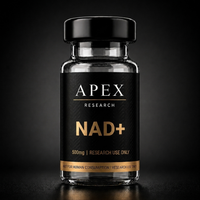
NMN
A direct building block for NAD+, studied widely in cellular-ageing research.

A step from NAD+.
NMN sits one step away from NAD+, the coenzyme that powers cellular energy and repair. Raising NAD+ as it declines with age is one of the most active ideas in longevity and NMN is the most discussed way to try.
At a glance
Where the research focuses.
NAD+ restoration
Raises NAD+ levels in humans - its best-documented effect.
Metabolic health
Studied for insulin sensitivity and energy metabolism.
Vascular function
Early human signals on blood-vessel and physical function.
Healthy ageing
Central to NAD+-based longevity research.
Refilling the tank.
NAD+ is essential and declines with age; NMN is studied as a way to refill it, with human data showing higher NAD+ levels after supplementation.
Whether that translates to ageing benefits in people is still open and its US regulatory status is genuinely unsettled.
Strength of the evidence.
- Raises NAD+ in humans
- NAD+ biosynthesis pathway established
- Metabolic and vascular signals
- Small human trials
- Human lifespan / healthspan claims
- Optimal dose and form
How it works
NAD+ synthesis
Converts to NAD+ via the salvage pathway.
EstablishedSirtuins
Higher NAD+ fuels sirtuin repair enzymes.
MechanisticMetabolism
Studied for insulin sensitivity and energy.
Early humanBioavailability
Oral absorption and transport debated.
ContestedSigns of a quality compound
NMN is sold widely as a supplement, but the FDA moved to exclude it from the supplement category while it is investigated as a drug - leaving its US status contested. It is not an approved drug.
- For research purposes only
- Not for human consumption
- Not FDA approved
- Consult a qualified professional